
What liability means
An employer’s liability is the total of every employee’s accrued benefit: what it would owe if every employee left today. It is not money the employer has spent; it is money it owes. The point of the trust is to hold enough money to cover it.
How a single benefit is calculated, with a worked example: How benefits are calculated.
The ledger
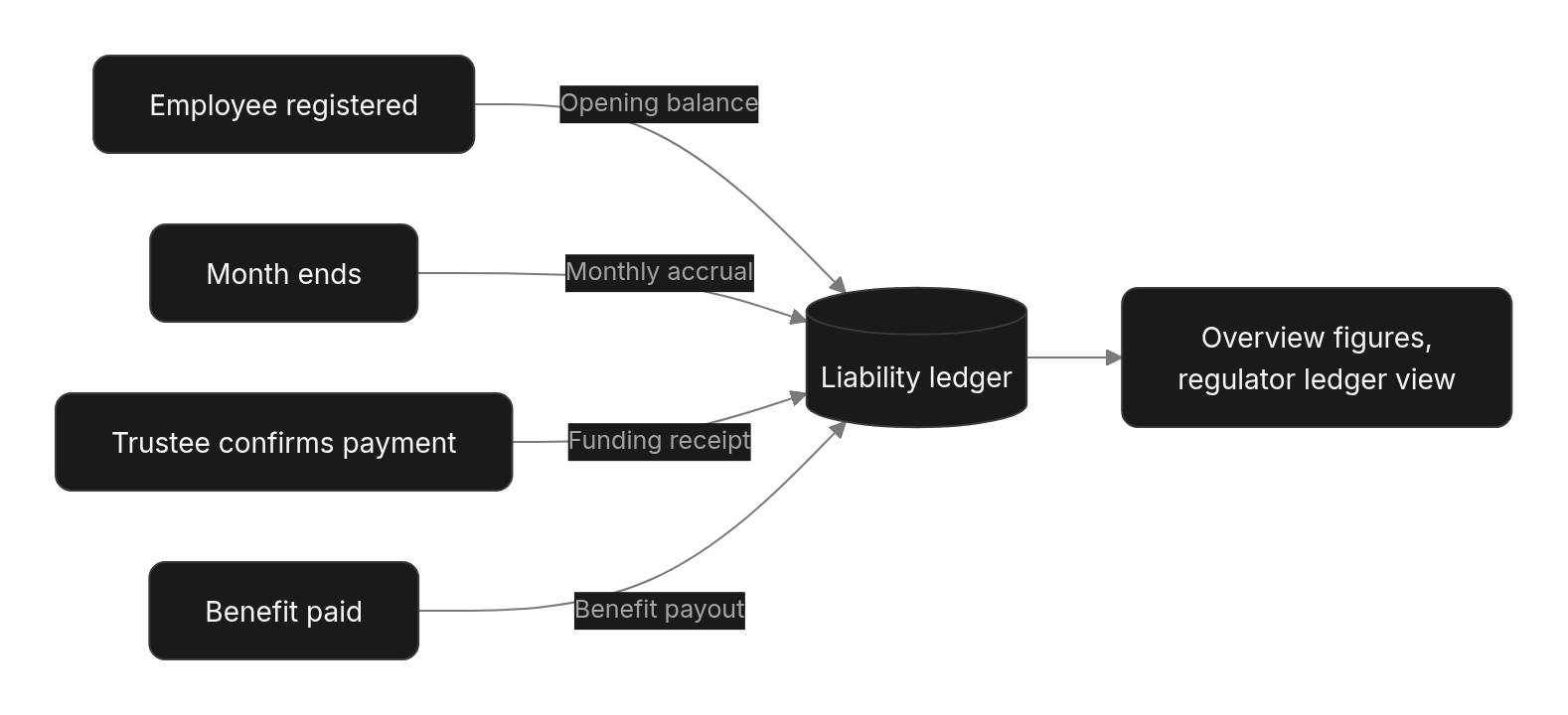
Every amount that changes liability or funding is written to the employer’s liability ledger as an entry. Entries are never edited or deleted; a mistake is put right with a new entry. That is what makes the ledger an audit trail.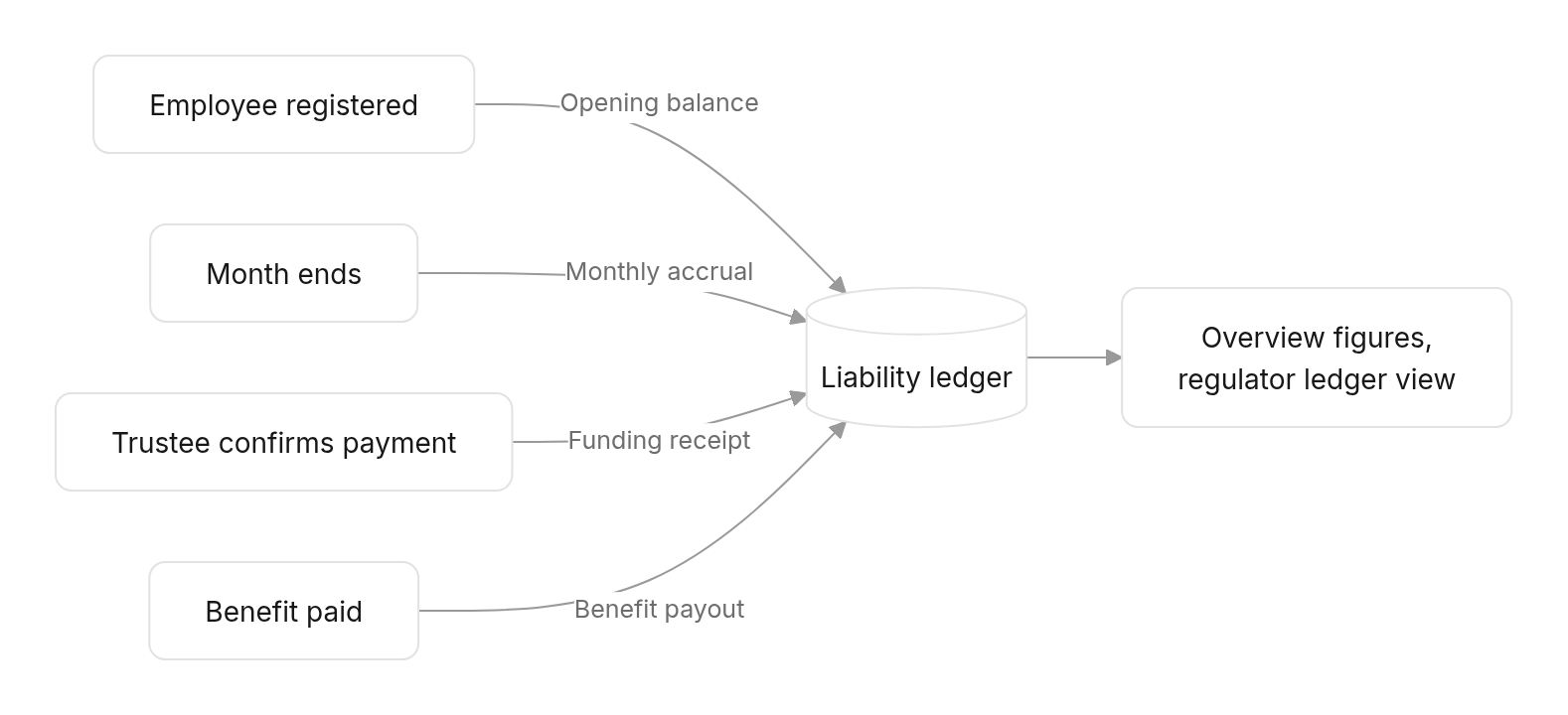
Entry types
Classifications
Each entry also has a classification, which says what state the benefit is in:The monthly accrual run
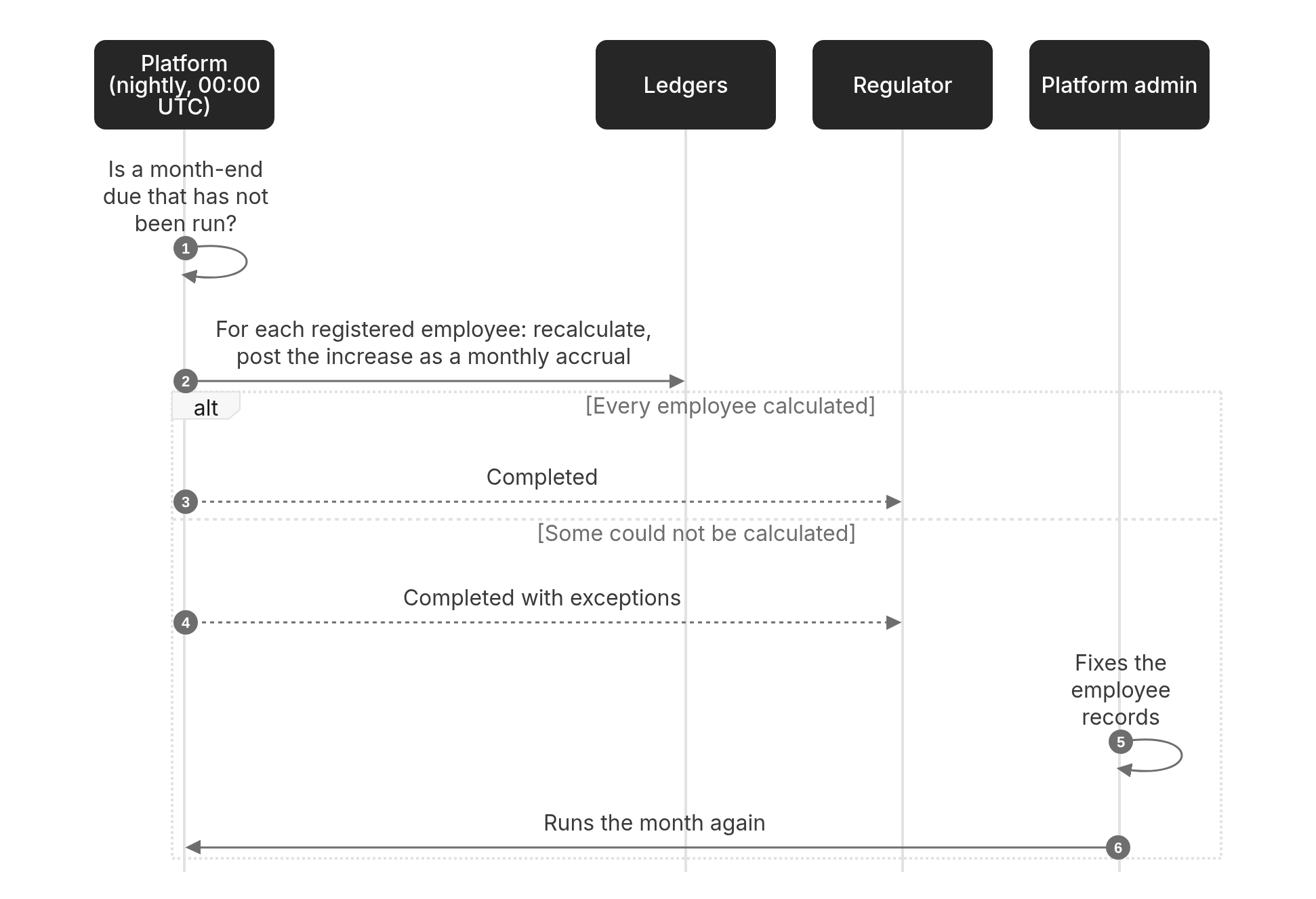
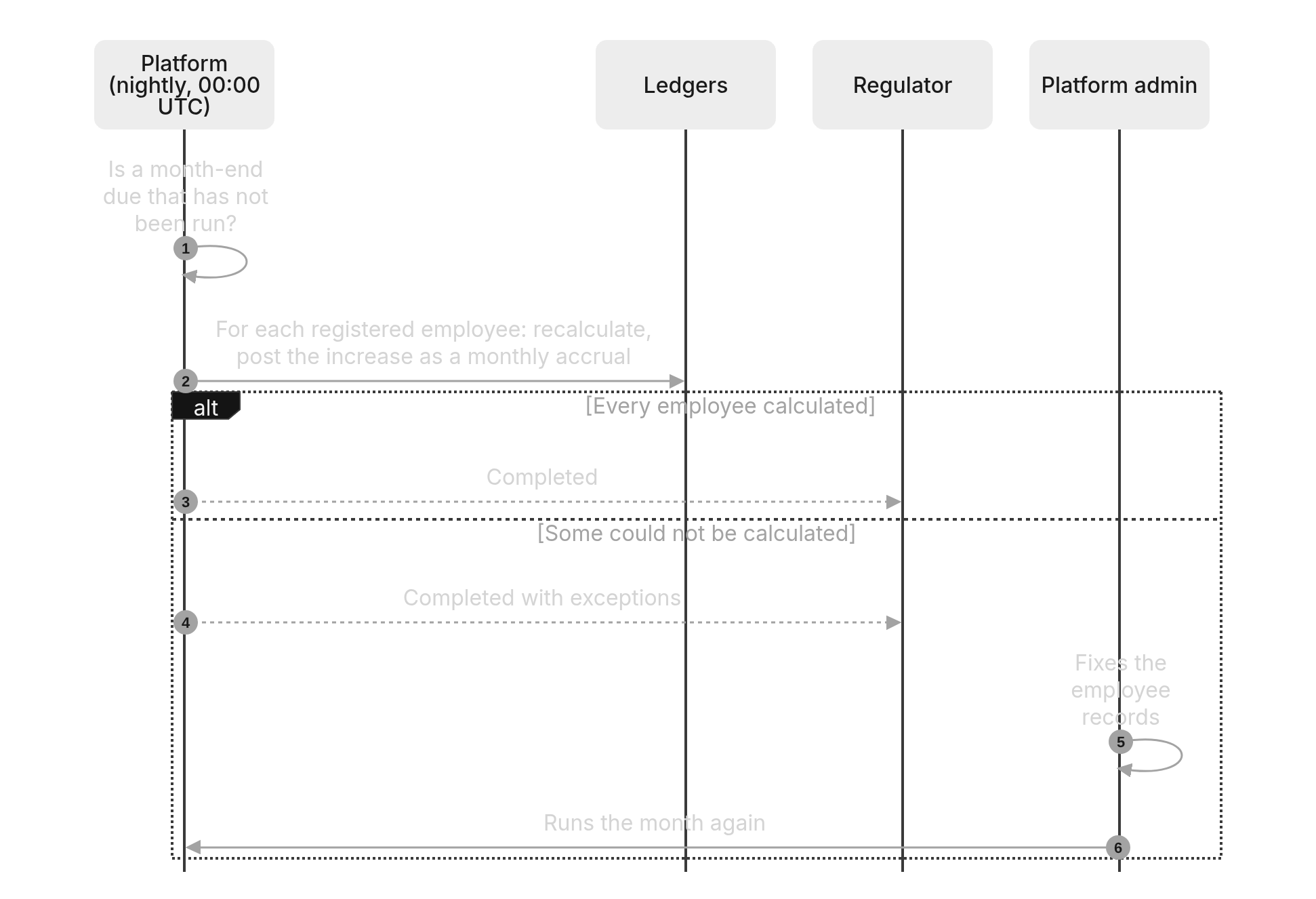
- The run starts automatically the night after a month ends. If the platform was down, it catches up the next night, oldest month first.
- Months are always run in order: a later month depends on the one before.
- An employee registered during a month gets their opening balance at the previous month-end; their first monthly accrual is for the month they joined.
- The regulator reviews every run in Monthly accruals; the administrator can run a month by hand in Monthly accrual.
Run statuses
Computation exceptions
An exception is an employee the run could not calculate. Their benefit for that month is missing from the totals until it is fixed, so the employer’s liability is understated.
The administrator fixes the record (salary and start date changes go through approval) and runs the month again.