Two places money sits
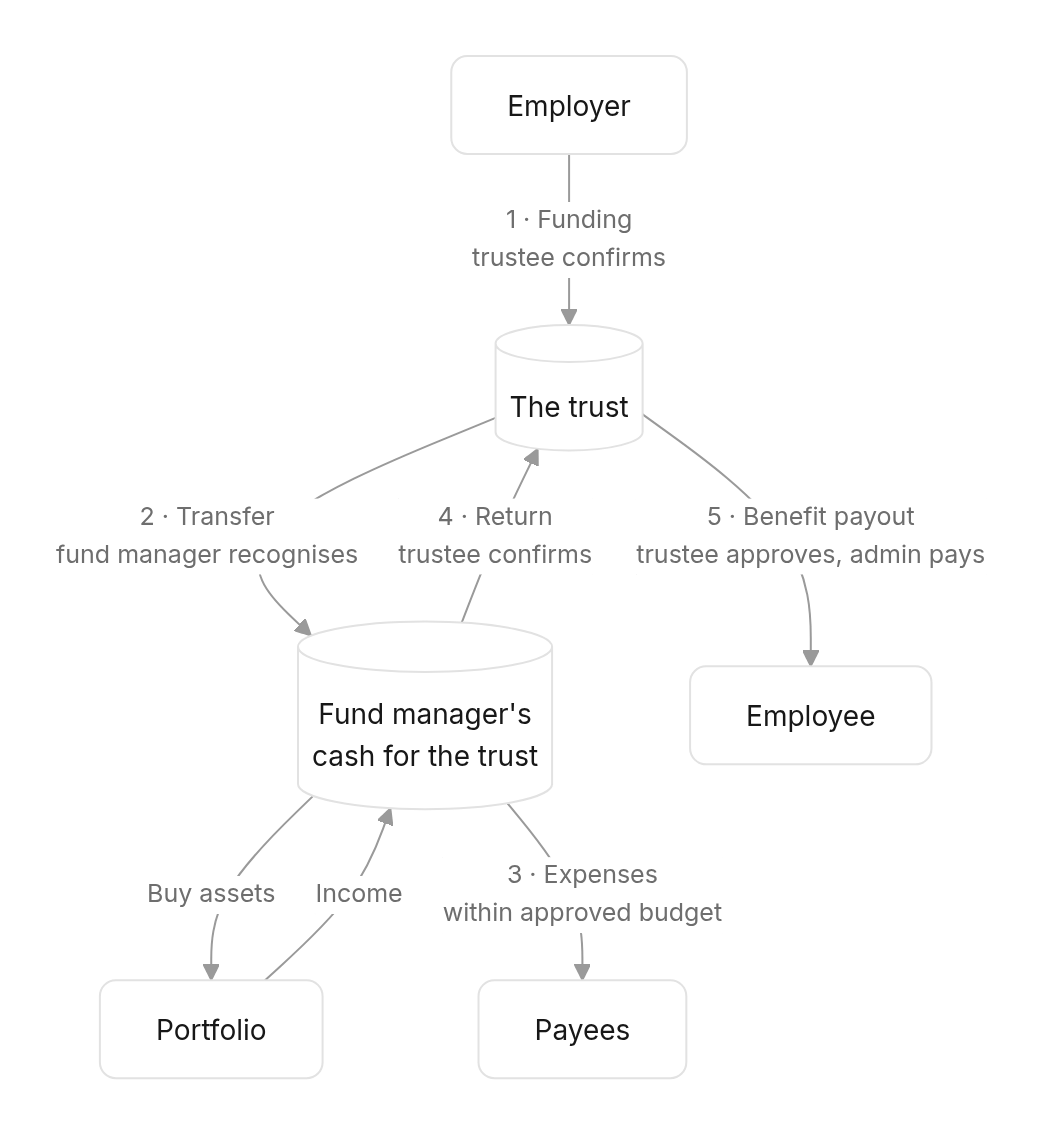
For each employer’s trust, money is held in one of two places:
The fund manager keeps a separate cash account per trust. Money never moves between trusts.
1. Employer funding: into the trust
The employer pays the trust in one of two ways.- Manual proof (bank or mobile money)
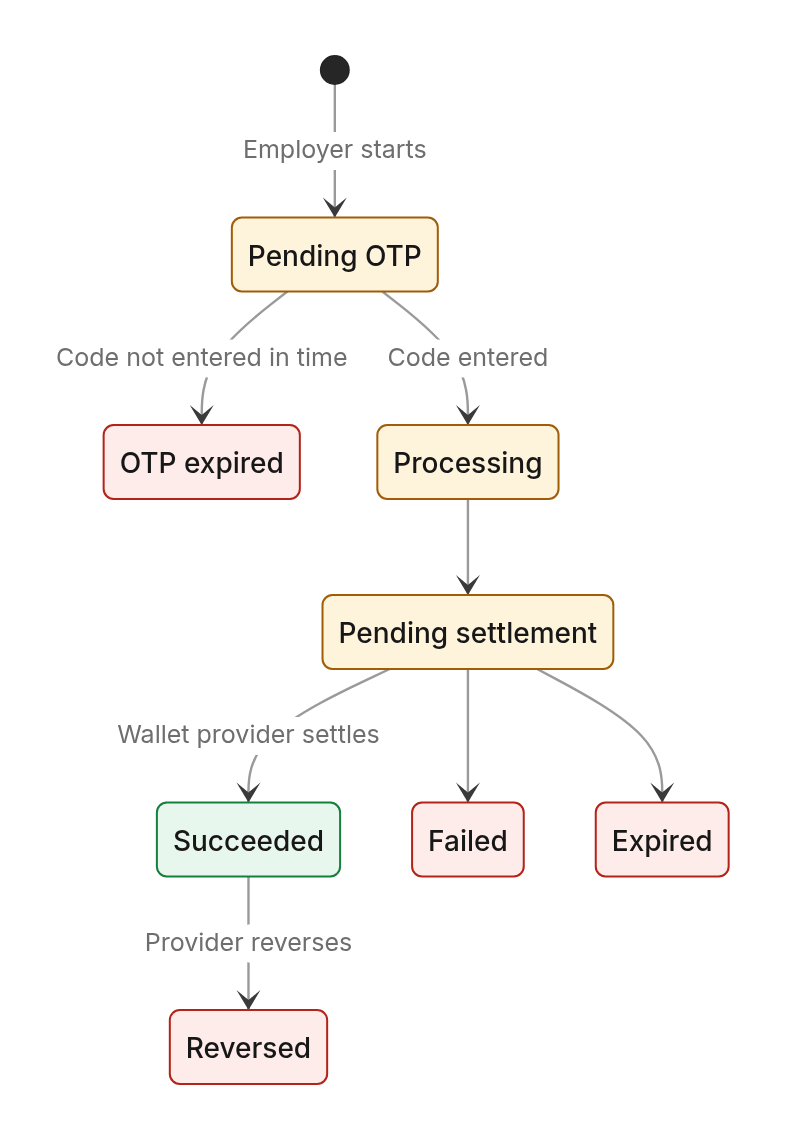
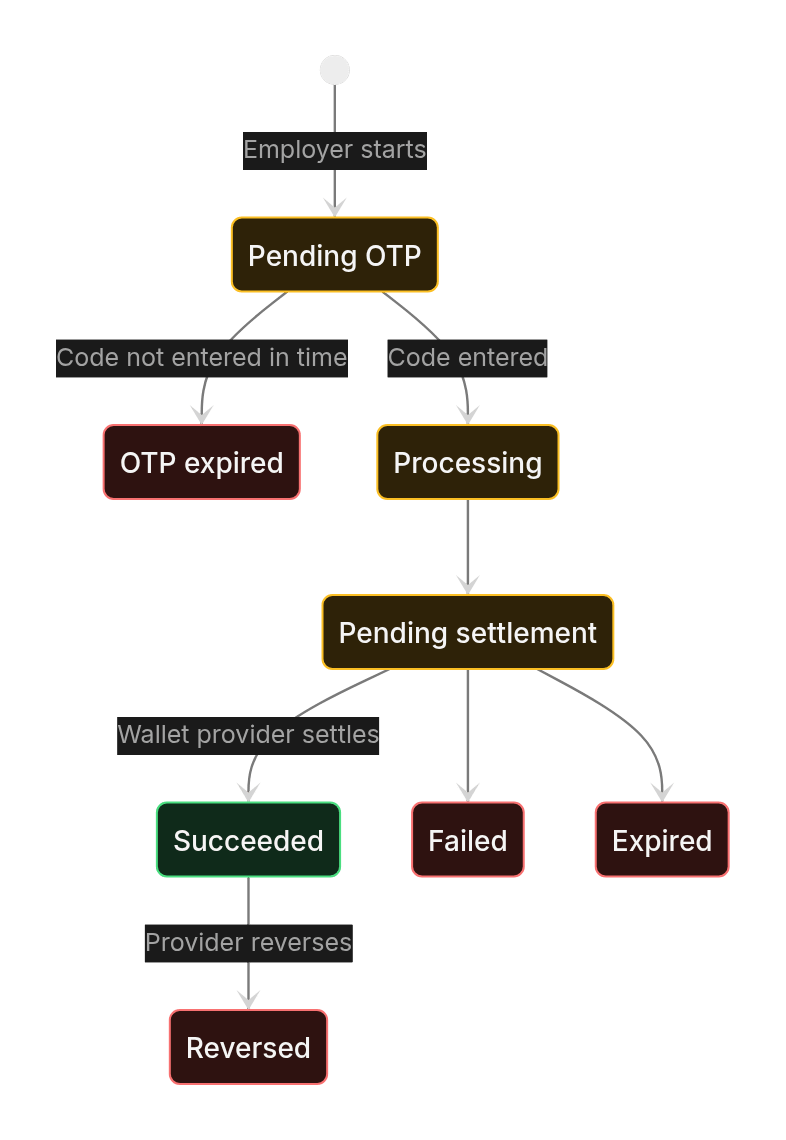
- SmartPay wallet
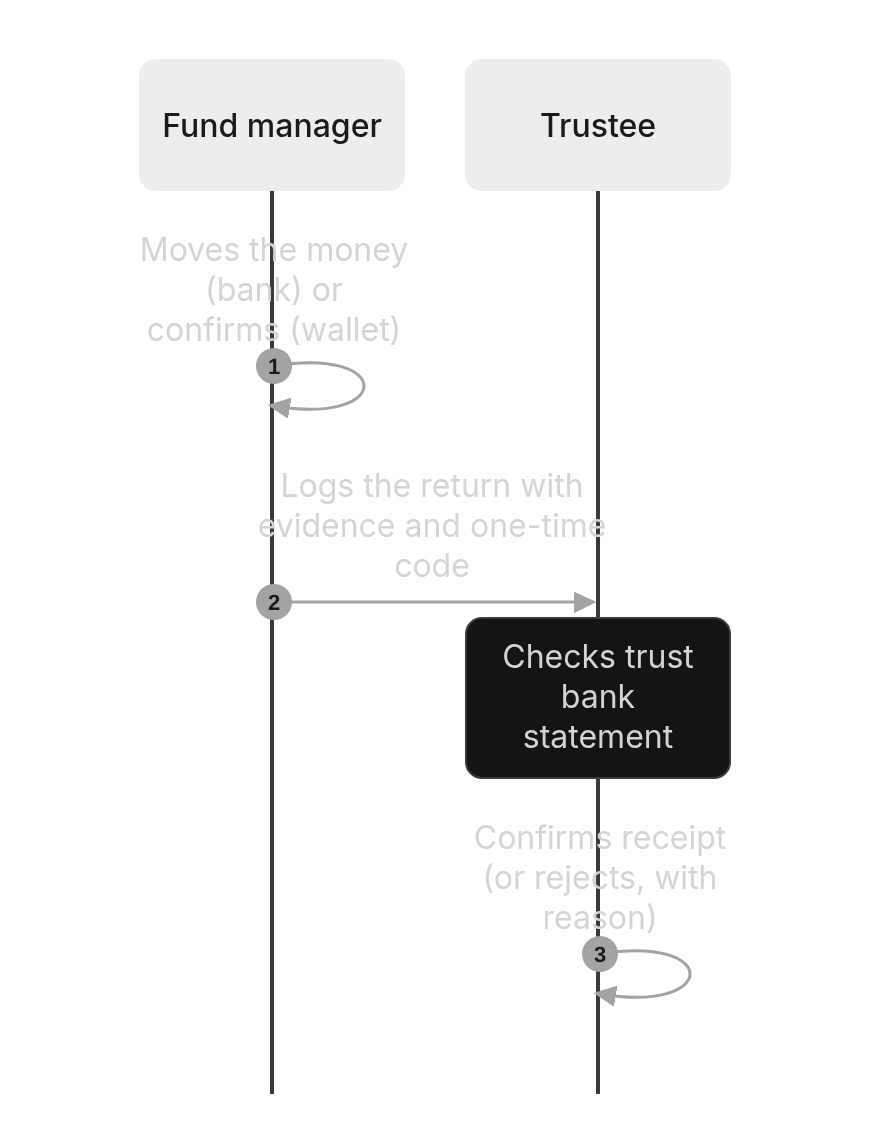
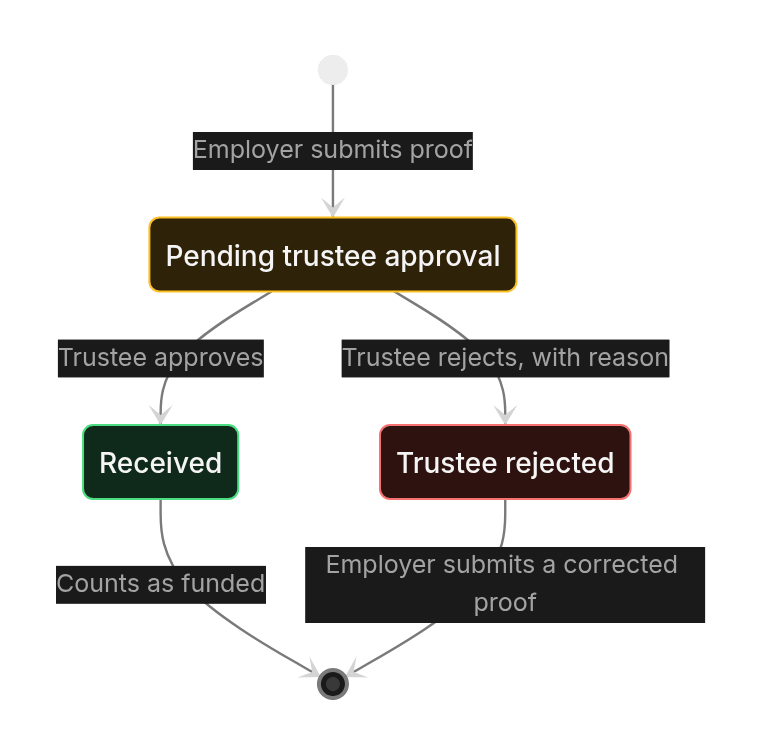
The employer pays outside the platform, then uploads the evidence. The trustee checks it against the trust’s bank statement.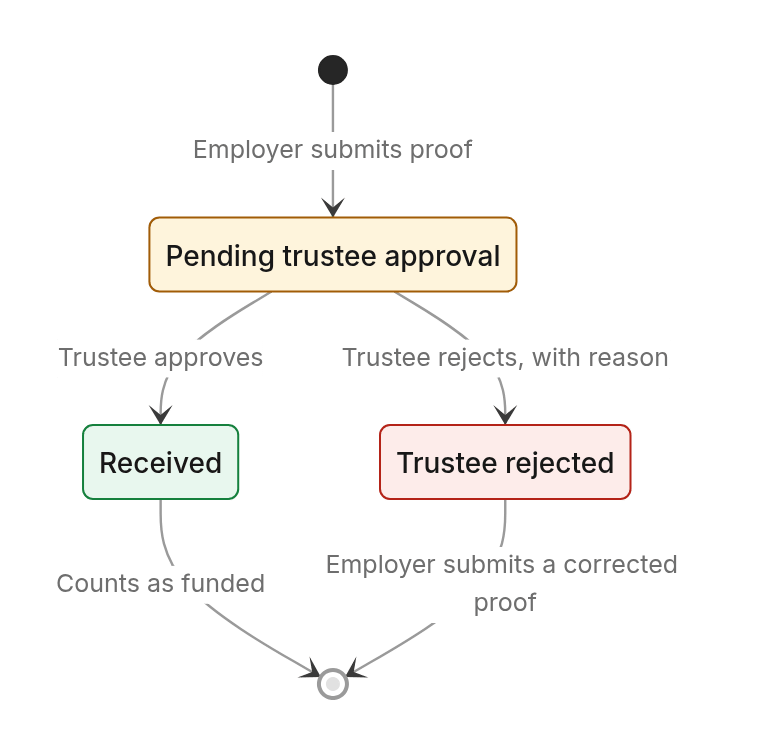
2. Trustee to fund manager
The trustee sends money it does not need to keep in the trust to the fund manager, to invest.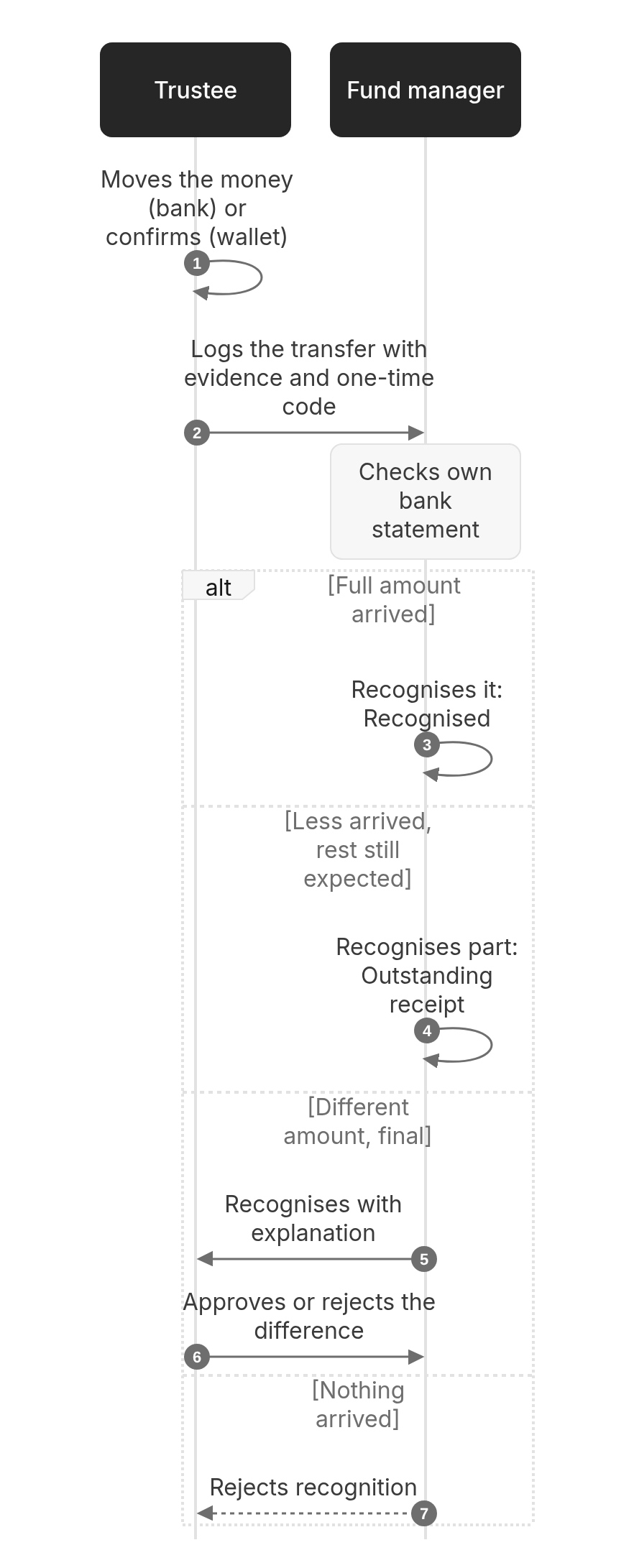
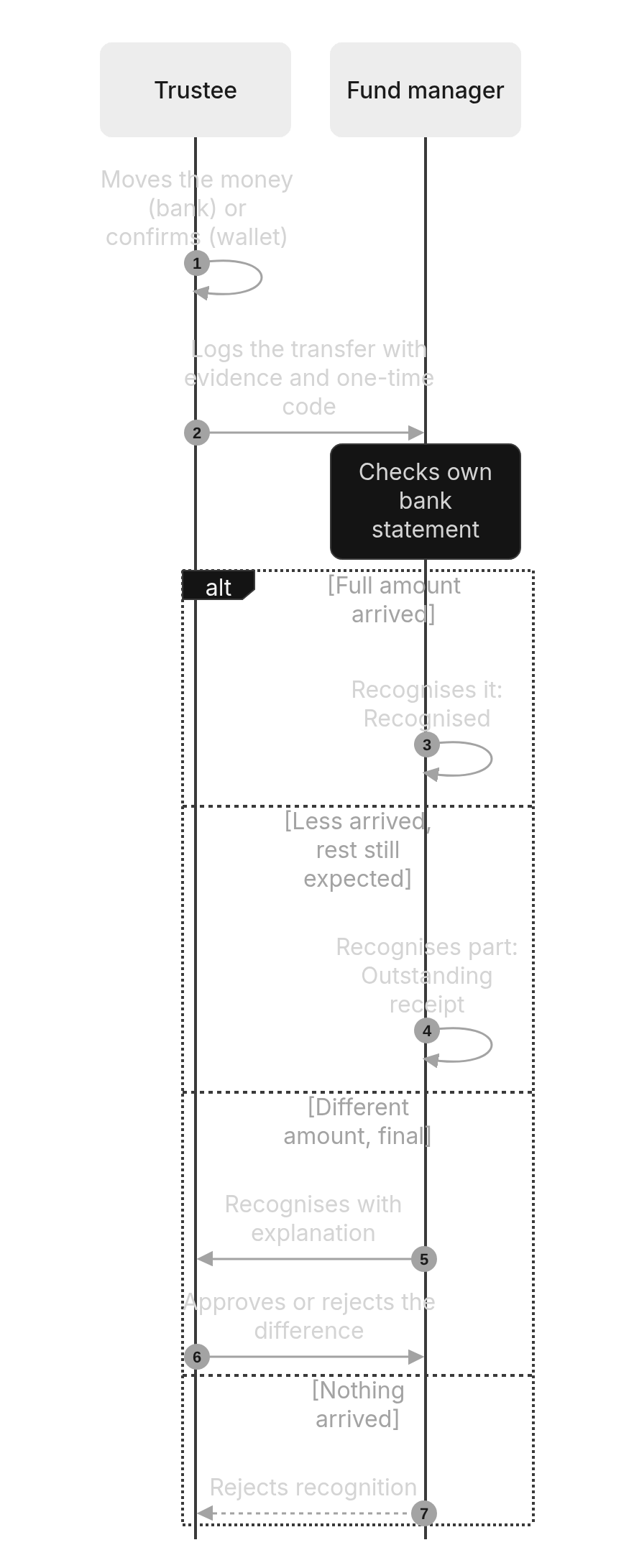
- The trustee can only send employer-funded cash: payments it has confirmed and not yet sent on.
- A bank reference cannot be reused for another recent transfer.
- Once logged, a transfer cannot be edited or reversed by the trustee. If it is wrong, the fund manager rejects the recognition.
- The fund manager is expected to recognise within 2 days.
Money that reaches the fund manager without a logged transfer is recorded as a manual recognition.
3. Expenses and budgets
The trust’s running costs — trustee fees, fund management fees, audit, bank and investment costs — are paid from the fund manager’s cash for the trust. Two controls apply.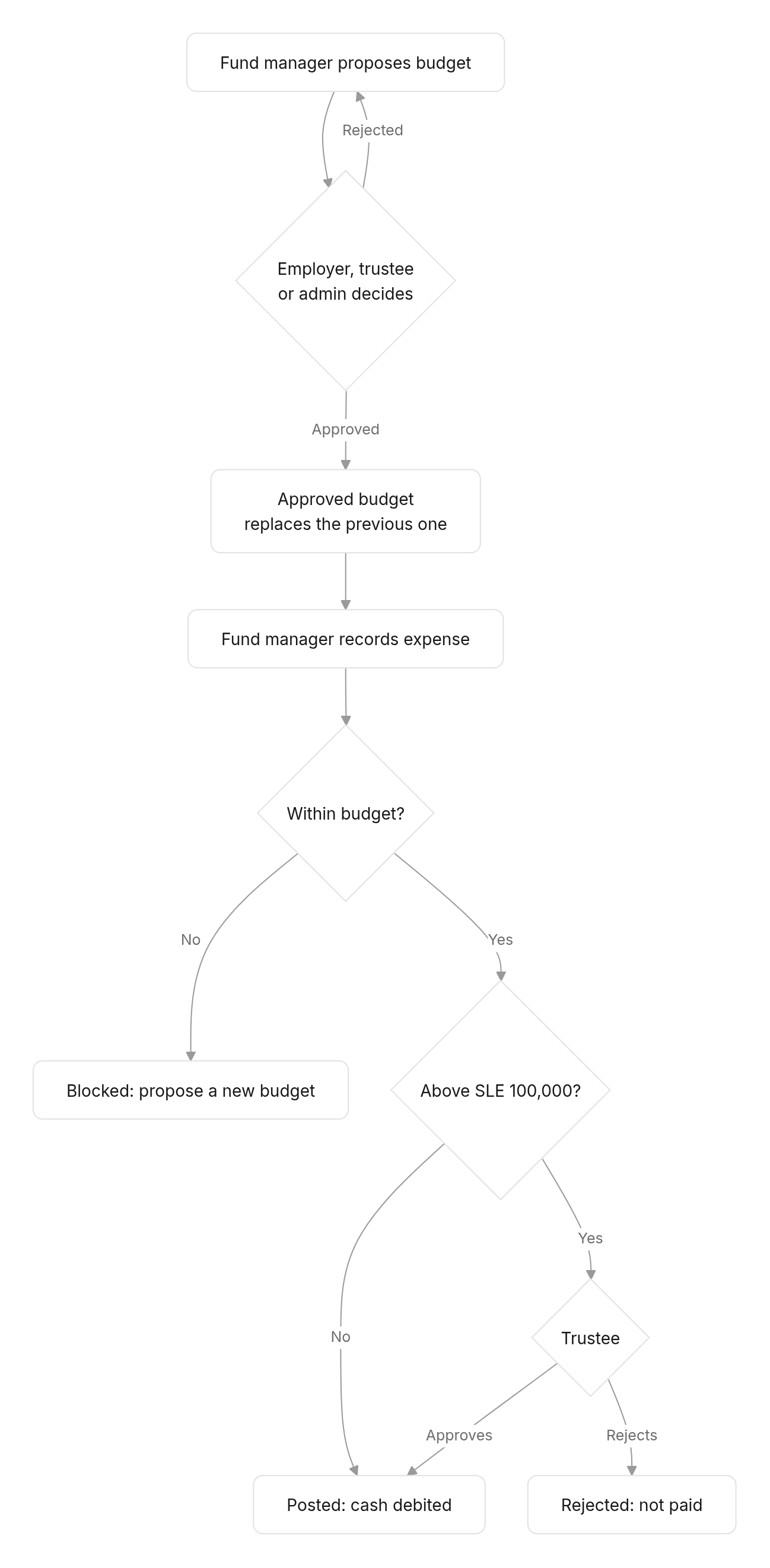
4. Fund manager back to the trust
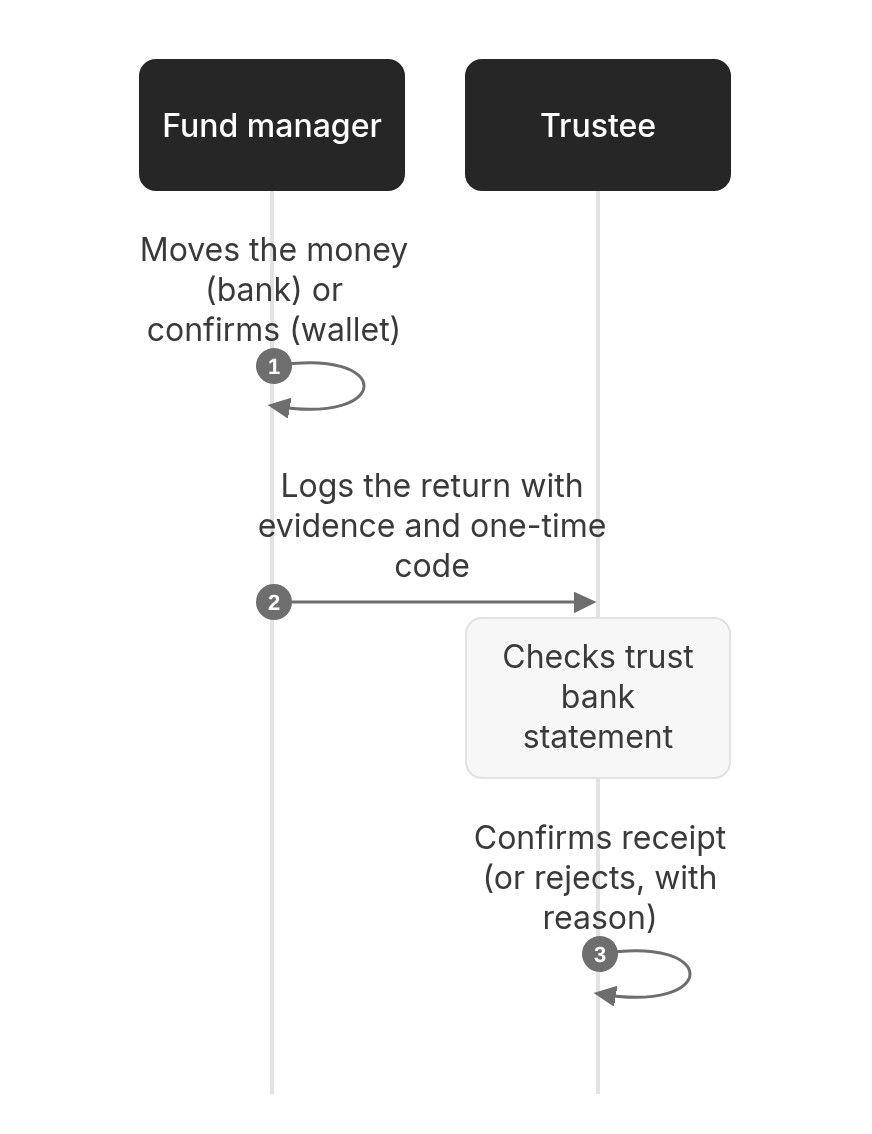
The fund manager returns money for one of four purposes: benefit funding (so the trust can pay leavers), investment income, sale of assets, or mandate wind-down. It can return no more than it holds for that trust.