
Wallet payments depend on the SmartPay gateway being switched on for your platform. Where it is not, the funding screen says No SmartPay wallet is linked to this employer yet, and payments are made by bank or mobile money with a funding proof.
Who has a wallet
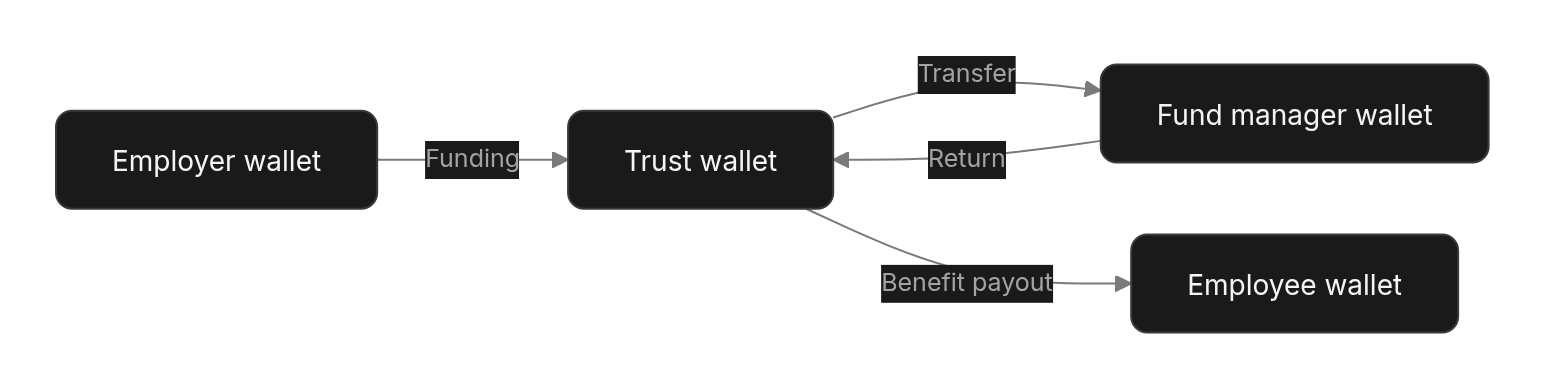
Every party that holds benefit money gets a wallet. The platform opens them; nobody has to apply.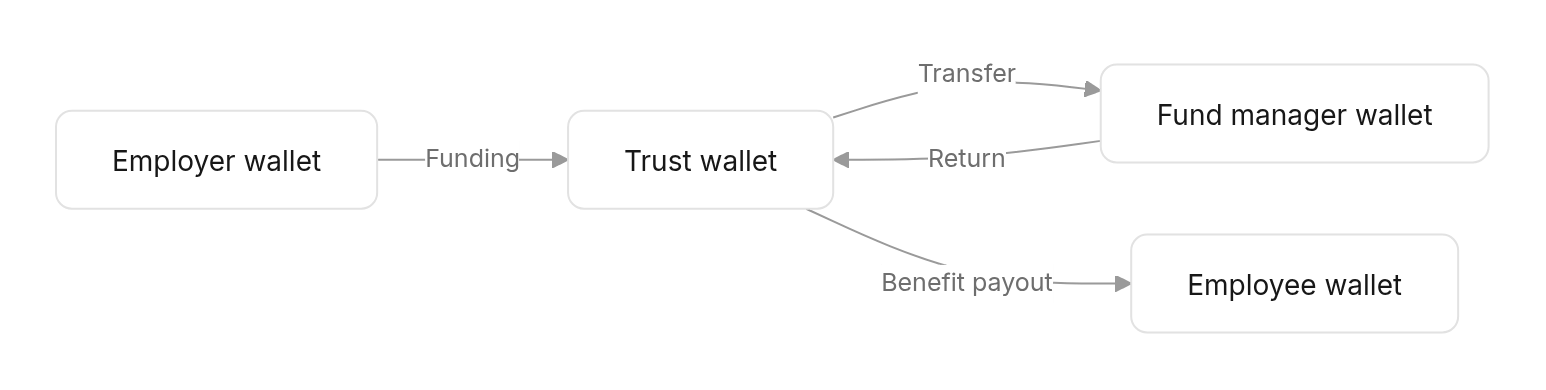
How a wallet payment is authorised
Two separate checks stand behind every wallet payment:- On the platform: the person confirms with a one-time code, and where the flow needs it, the checker approves — for example the trustee approving a benefit payment.
- On the gateway: SmartPay holds a mandate for the platform on each wallet: a standing permission to debit it on the platform’s instruction, within limits. The platform’s code and approvals are what earn the right to use that mandate.
Employer funding from a wallet
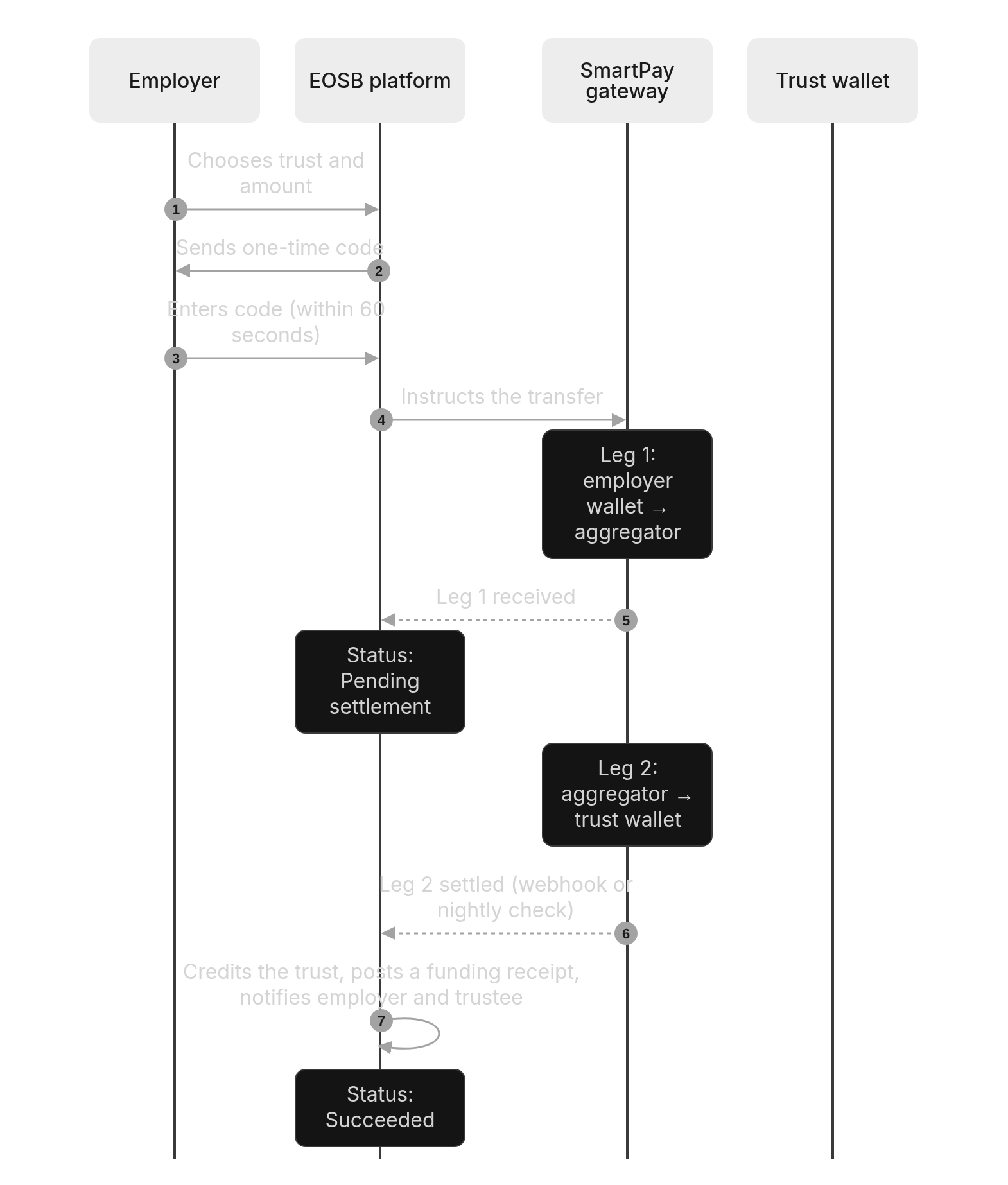
A wallet payment into the trust travels in two legs through the payment aggregator: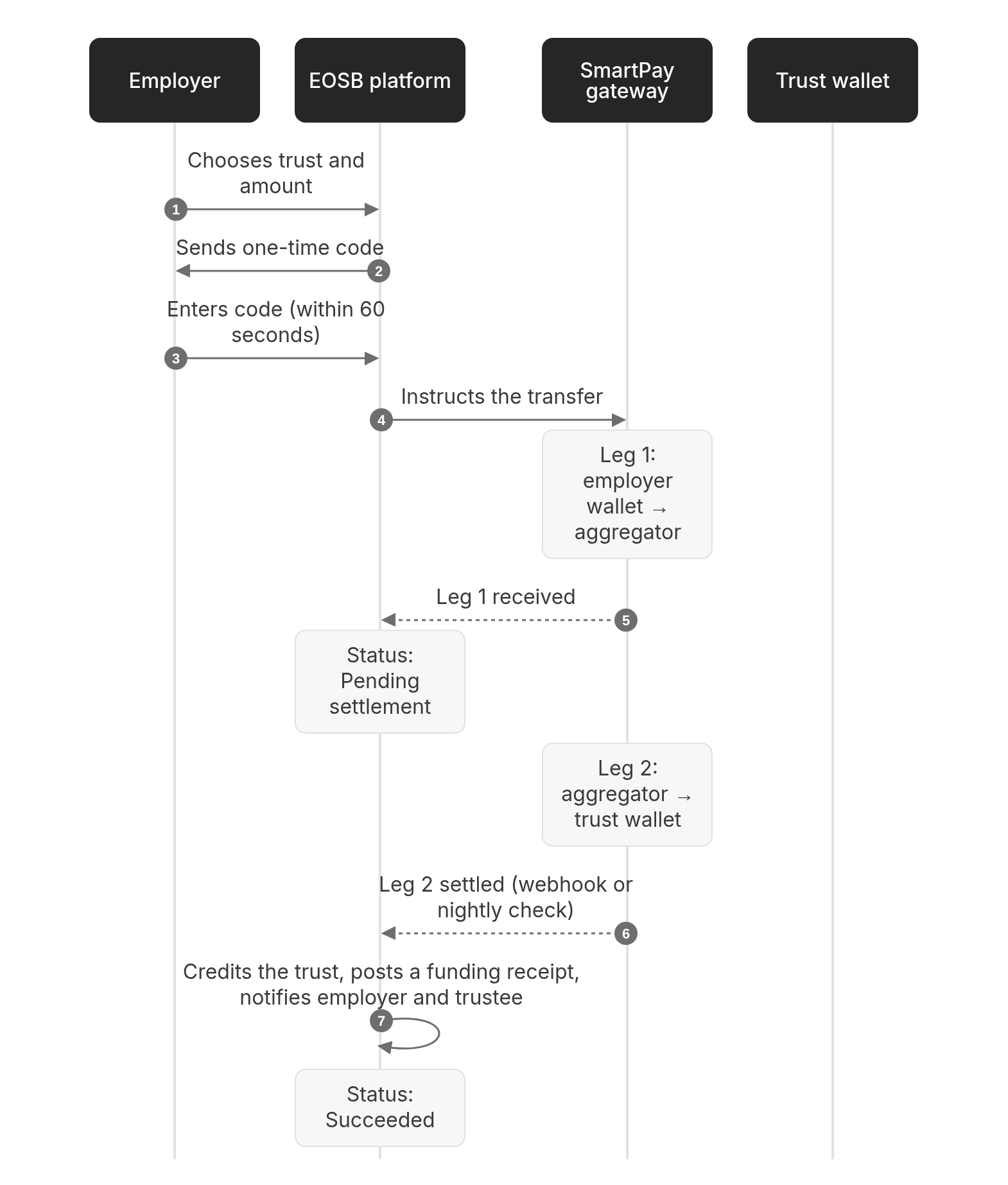
Paying from the SmartPay portal
An employer can also start a payment from the SmartPay portal instead of the EOSB platform: the employer’s administrator signs in to SmartPay, names the trust, and moves the money under their wallet PIN. Before anything moves, SmartPay asks the platform whether the trust belongs to that employer, so money can only go to the employer’s own trust. When the transfer completes, the platform picks it up and records it exactly as if it had been started on the platform, then settles it the normal way.When a wallet payment does not go through
How the platform keeps wallets and books in step
A payment can never be made twice
A payment can never be made twice
Every transfer carries one reference from start to finish. If a request times out and is retried, SmartPay recognises the reference and does not move the money again.
Unknown outcomes are held, not guessed
Unknown outcomes are held, not guessed
Only a clear refusal is treated as failed. If the platform cannot tell whether money moved — a network error, a timeout, a payment still processing — it holds the payment for reconciliation instead of marking it failed and letting someone pay again.
Two ways to hear about every transfer
Two ways to hear about every transfer
SmartPay notifies the platform the moment a transfer completes (a webhook). Because a notification can be lost, every night at 01:30 UTC the platform also pulls the previous day’s statement from SmartPay and applies anything it missed. It then checks the other way: any payment the platform still shows as waiting, whose money should have arrived by now, but which SmartPay does not report.
Mismatches are flagged, never auto-corrected
Mismatches are flagged, never auto-corrected
If SmartPay reports something that disagrees with the platform’s record, the difference is written to the audit log for someone to investigate. The platform never changes a figure on its own to make them agree.
What is final when
What is final when
Benefit payouts and fund manager transfers are final once SmartPay executes them. Employer funding becomes final when the second leg lands in the trust wallet.