
The whole journey
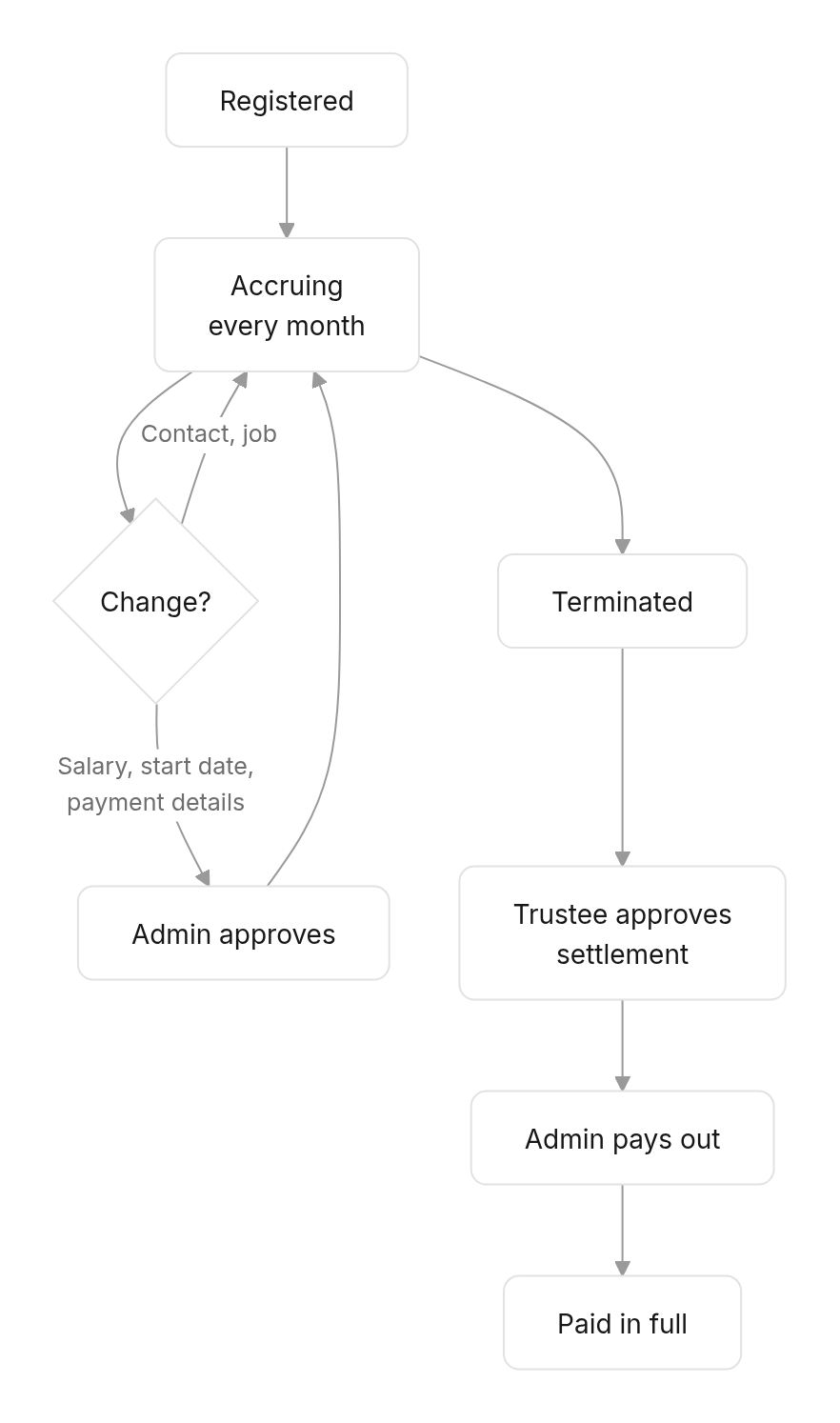
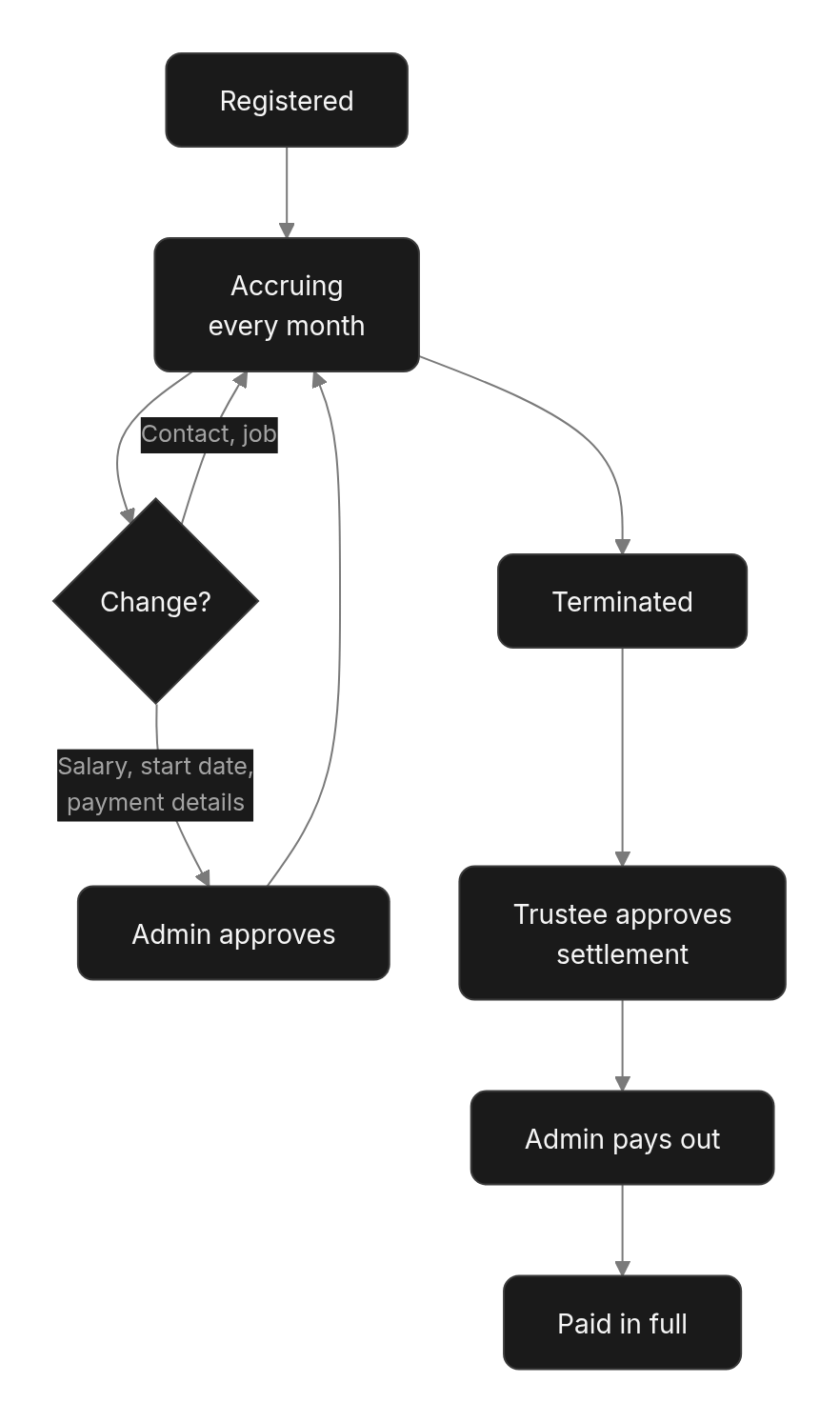
1. Registration
Who: the employer, or the administrator on their behalf. How: one at a time or bulk upload. Requires: the employer to be Active. On submission, the platform does four things automatically:
A registration can be saved as a draft at any point. A draft earns nothing and is not an employee until it is submitted.
2. Every month
The night after each month ends, the platform recalculates every registered employee’s benefit and posts the increase to the employer’s ledger as a monthly accrual. Nobody needs to start it. See Liability and accruals.3. Changes to the record
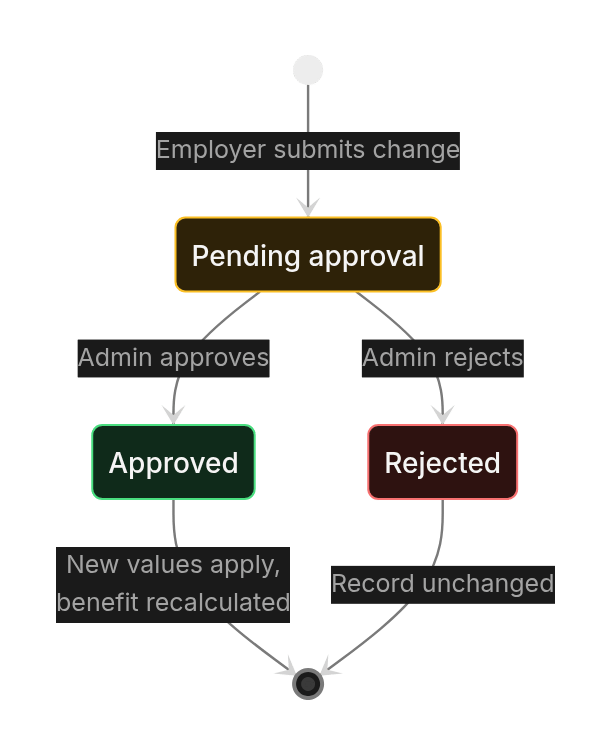
Changes fall into two groups, depending on whether they affect how much the employee is owed or where it is paid.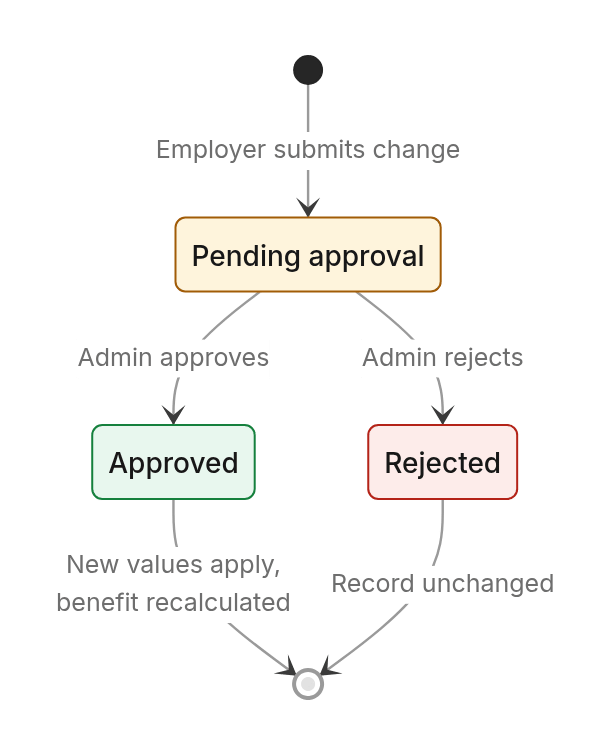
4. The payout account
5. Termination and settlement
Who: the employer (or administrator). Reasons: resignation, retirement, dismissal or end of contract. The termination date cannot be in the future, and termination cannot be undone.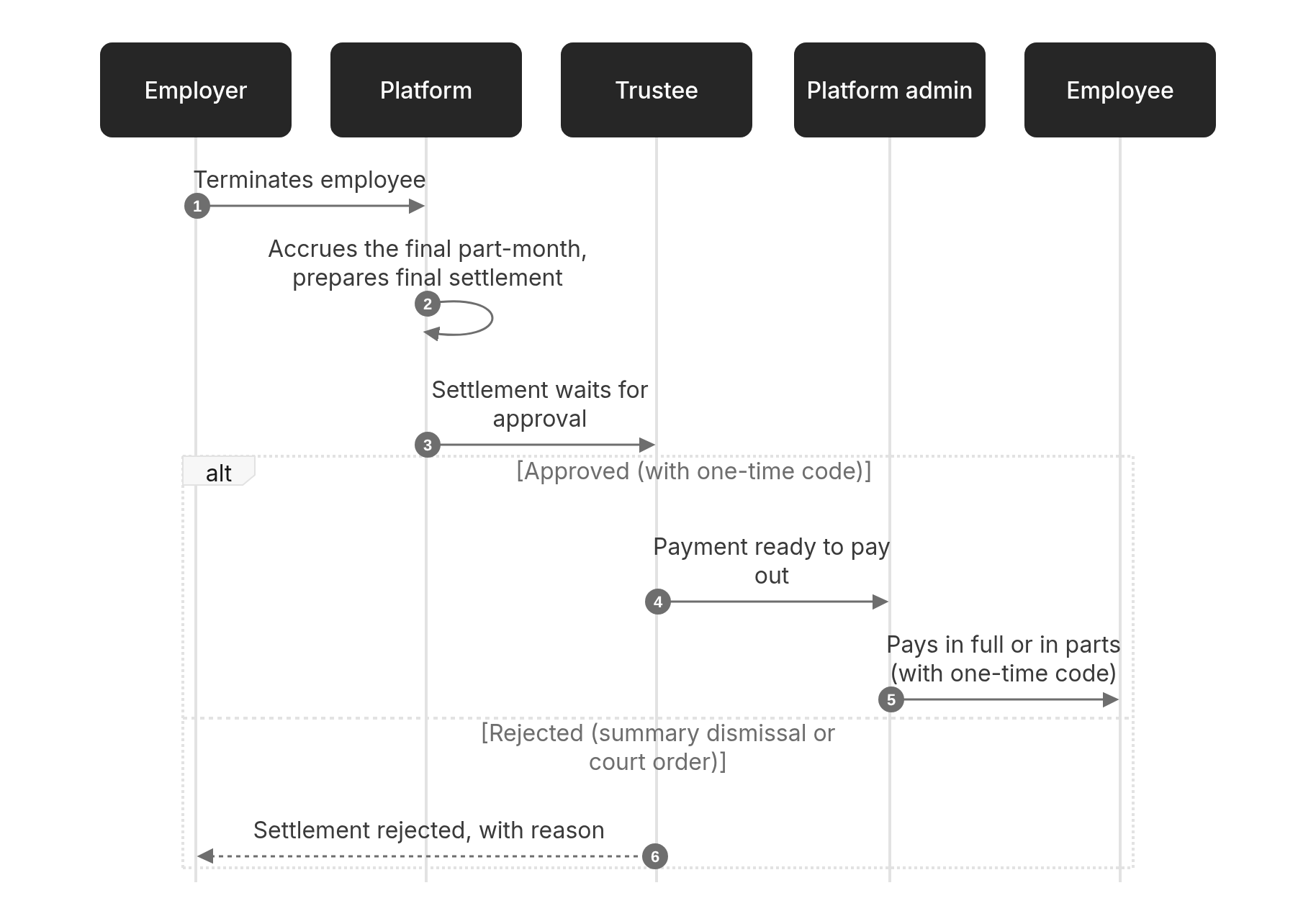
Settlement statuses
The amount is the employee’s whole accrued benefit up to the termination date, not a multiple of salary. Once paid, it no longer counts in the employer’s liability.