
Where: Monthly Accruals in the menu. It opens on the most recent month-end.
Read a month
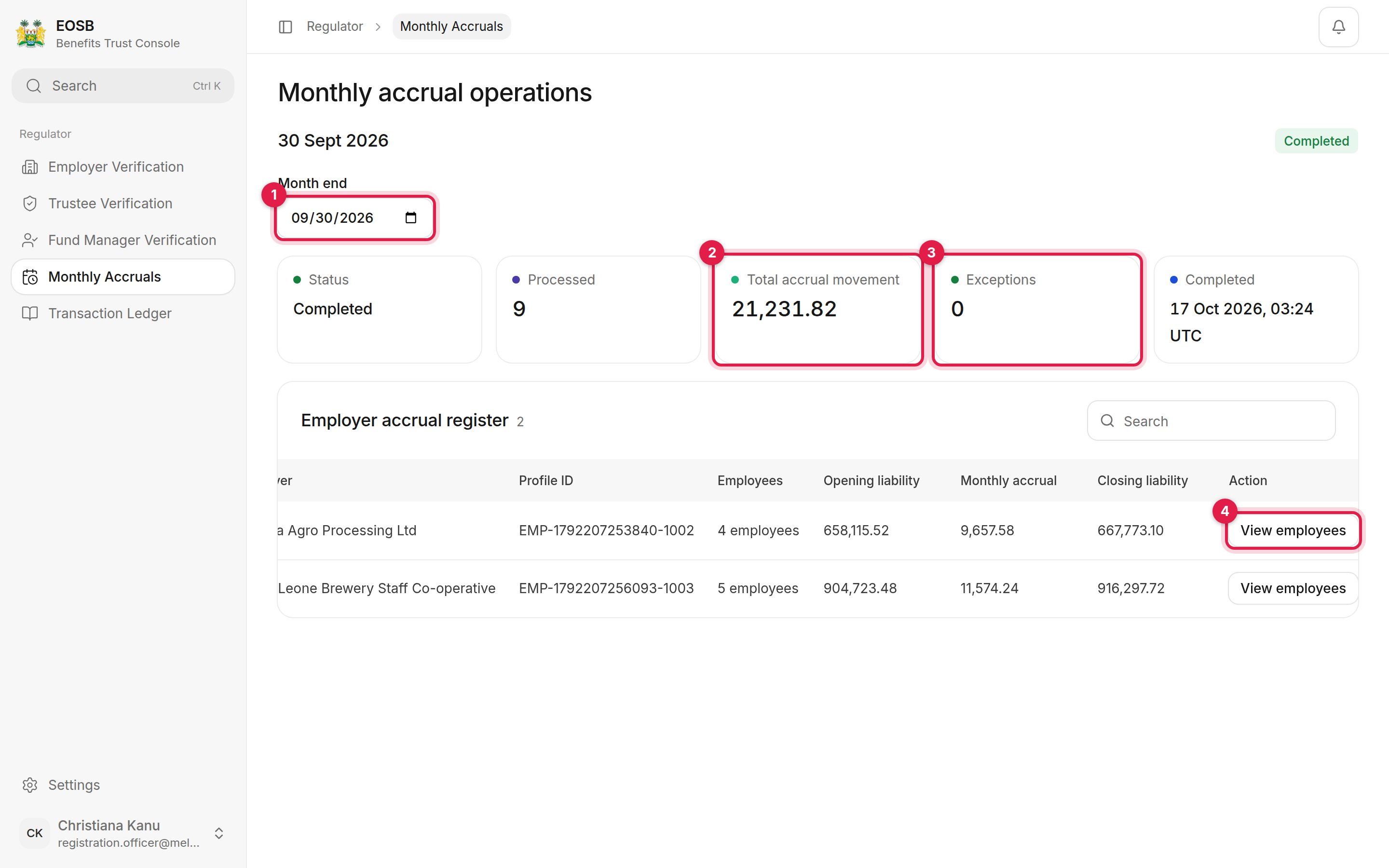
A completed month
- Month end — pick another month. Use the last day of a month.
- Total accrual movement — the benefit added across all employers that month, in SLE.
- Exceptions — employees who could not be calculated. Anything other than 0 needs following up; see Computation exceptions.
- View employees — open one employer’s employees for the month.
Run statuses
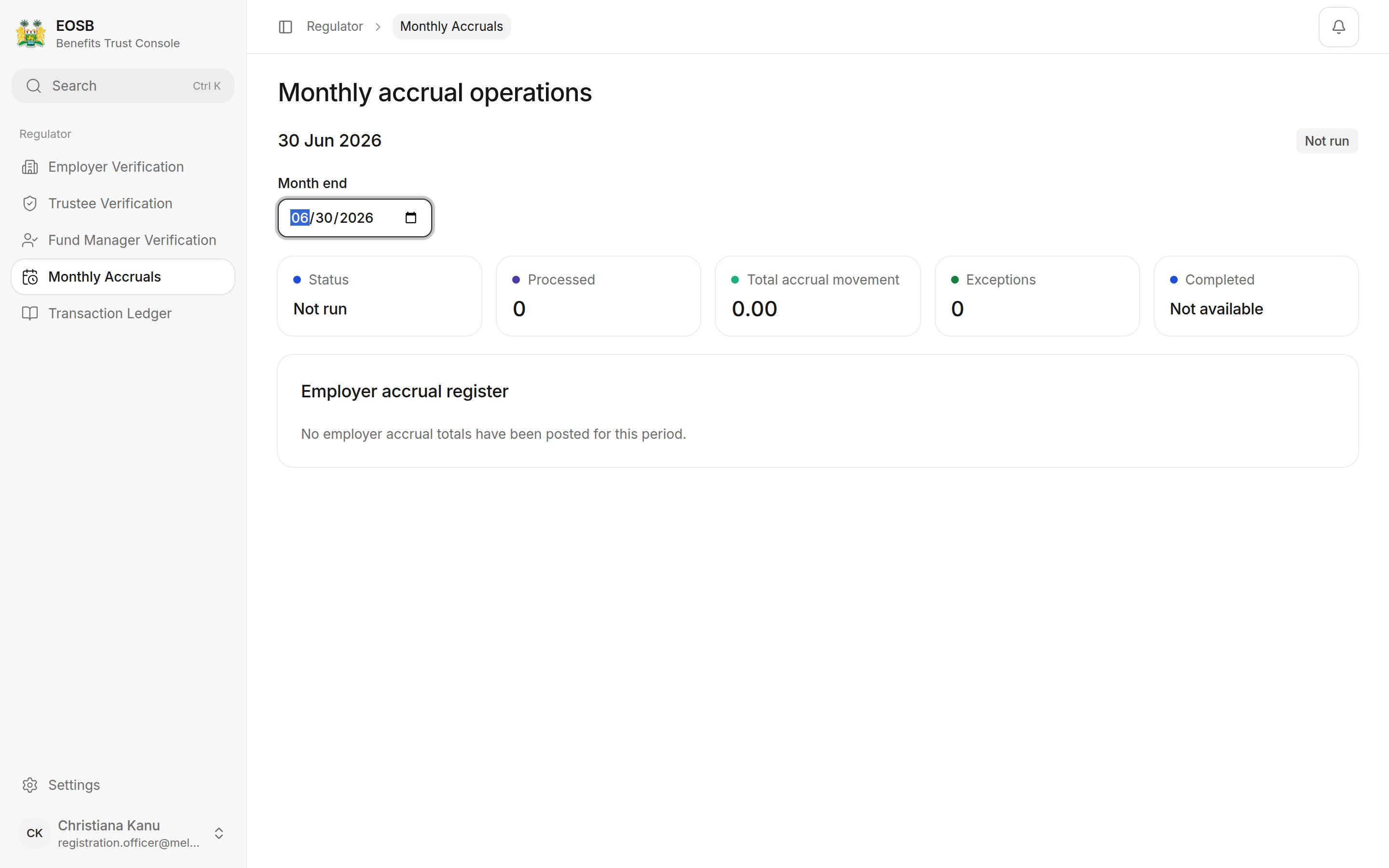
A month that has not been run
A month that has not been run
Look at one employer’s employees
Select View employees on an employer’s row.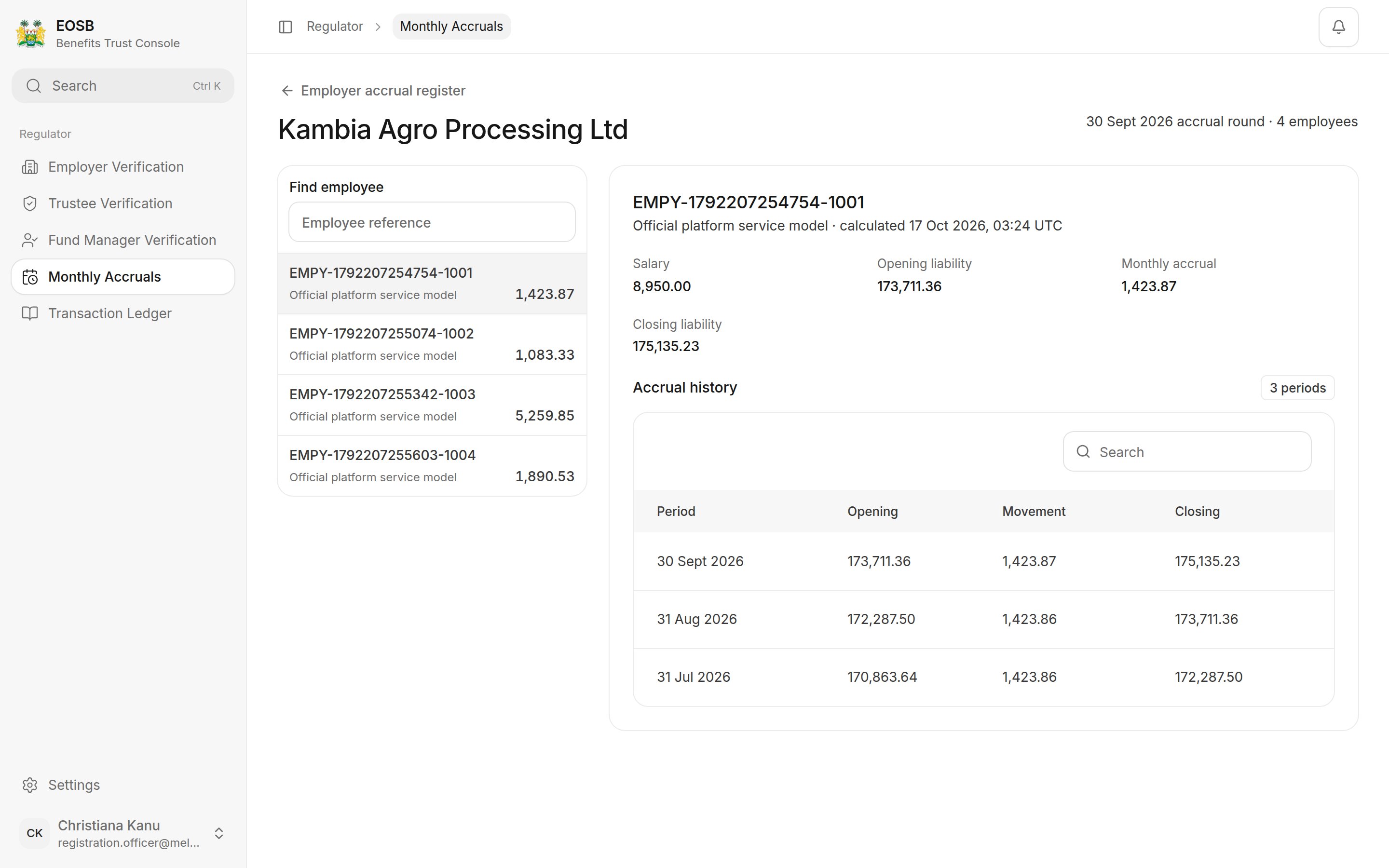
One employer's employees for the month
- On the left, Find employee searches by employee reference. Each employee shows their name, trust model and monthly accrual.
- On the right, the selected employee’s name and reference, their Salary, Opening liability, Monthly accrual and Closing liability, and their Accrual history month by month.
Computation exceptions
Select Computation Exceptions to list the accrual records the monthly run could not finalise, for example because an employee’s salary or opening balance is missing. The page opens on the last month-end; change Month end to look at another month. Each row shows the period, employee, employer, the exception code, what it blocks, its review status and when it was raised. Follow up anything listed with the platform administrator, who corrects the source data so the next run can finalise it.Good to know: what to look for
Good to know: what to look for
- The run completed. A month still Not run a few days after month-end is worth raising with the administrator.
- Exceptions are 0. Each exception is an employee whose benefit is missing from the totals, so the employer’s liability is understated until it is fixed.
- Movements are plausible. An employer’s accrual normally changes little from month to month. Large jumps usually mean new staff, pay rises or employees passing a work anniversary — check in the employee view. The formula is explained in How benefits are calculated.